
… as part of the call for tenders “Demonstration and In-Orbit Validation of Space Technologies.“
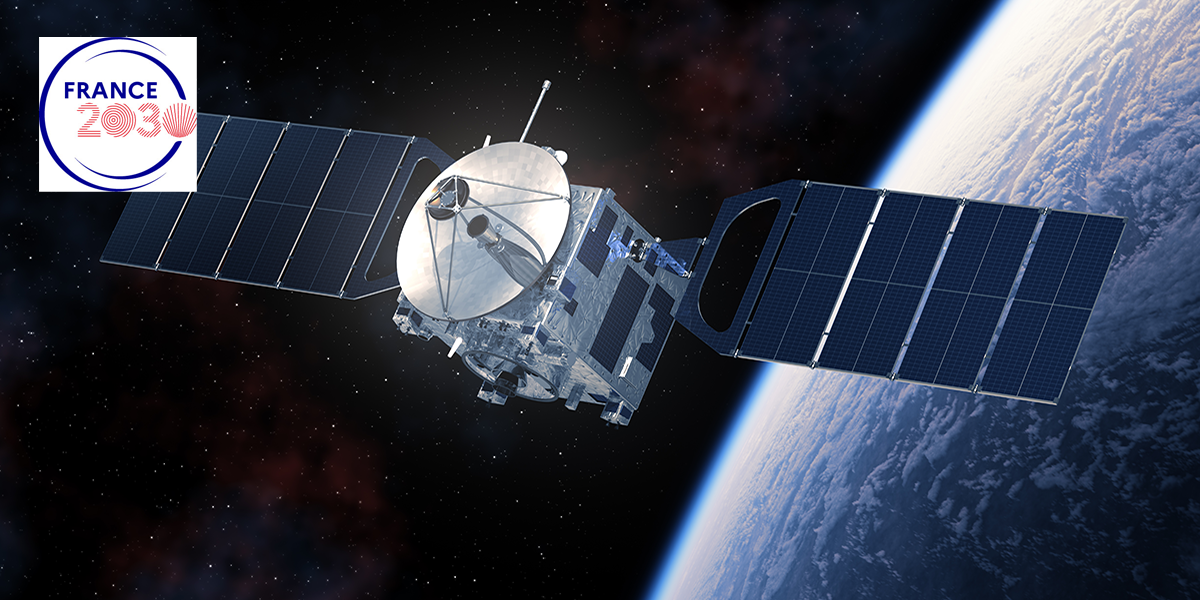
ACTIA Aerospace and its subsidiary STEEL Electronique announce their selection as winners of the space component of the France 2030 program, following the call for tenders “Demonstration and In-Orbit Validation of Space Technologies (IOD-IOV),” launched by the French Space Agency (CNES) on behalf of the State.
This initiative aims to foster the emergence of leading French industrial players in the field of in-orbit demonstration and validation, and to accelerate the adoption of innovative space technologies by the national space ecosystem.
As part of this initiative, ACTIA Aerospace and STEEL Electronique will contribute their technological expertise with:
STRELLAN: a next-generation space GNSS receiver developed by ACTIA Aerospace, featuring advanced navigation functions to meet the needs of telecommunications and positioning satellite constellations (LEO PNT). This product stands out for its high precision performance (position, velocity, time/frequency), compact design, and energy efficiency, offering a competitive French solution on the global market.
DREAM: an embedded electronic system developed by STEEL Electronique, which will enhance the technologies tested and validated in orbit under this program.
This project is funded by the French government as part of France 2030 and operated by CNES.
For ACTIA Aerospace and STEEL Electronique, this recognition highlights the relevance of their technological expertise and their commitment to developing innovative solutions for the space industry of tomorrow.
About France 2030:
Launched by the French government, France 2030 reflects a dual ambition: to sustainably transform key sectors of our economy (including energy, automotive, healthcare, aeronautics, and space) through innovation, and to position France as a leader in shaping the world of tomorrow.
With a budget of €54 billion, France 2030 supports the entire innovation cycle, from fundamental research to industrialization.
The program is implemented collectively: projects are driven by economic stakeholders in close collaboration with the academic world, to foster the emergence of breakthrough innovations.
The space component of France 2030 is operated by the French Space Agency (CNES) on behalf of the State.
Visit Aerospace website